
KEY POINTS
- Punxsutawney Phil forecasted six more weeks of winter after seeing his shadow.
- Meteorological data indicate the East may experience colder than normal temperatures while the West sees milder conditions.
- Climate trends show US winters warming overall, reducing the predictive relevance of traditional groundhog forecasts.
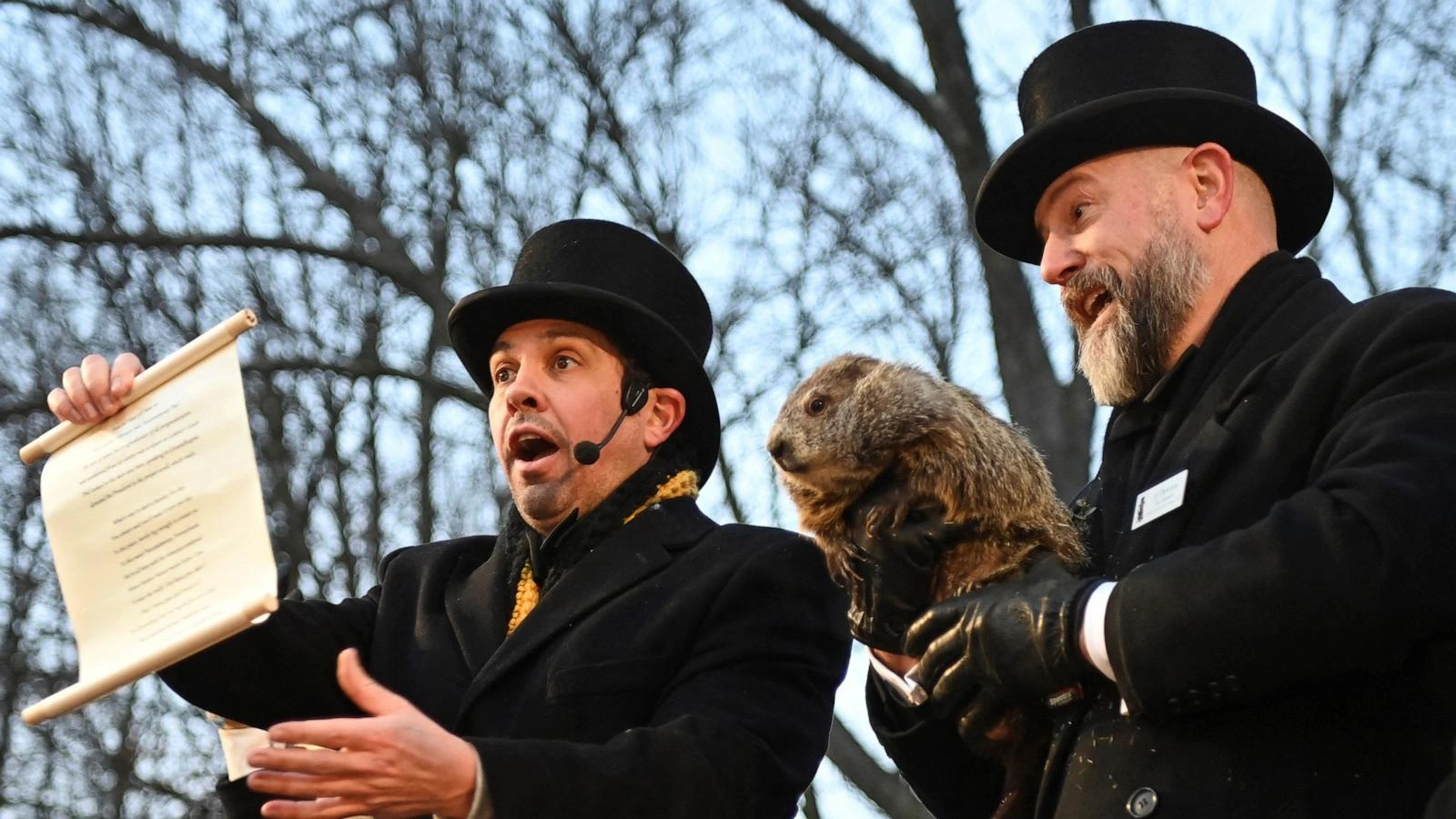
Punxsutawney Phil, the groundhog weather icon, emerged from his burrow Monday morning and saw his shadow, signaling six more weeks of winter, according to the century old tradition observed each Groundhog Day.
The event drew crowds and national media attention, even as meteorologists caution that Phil’s predictions have limited reliability.
The annual Groundhog Day ritual in Punxsutawney, Pennsylvania, dates back to the late 1800s.
Legend holds that if Phil sees his shadow, winter persists for six more weeks; if not, spring arrives early. The spectacle attracts thousands and generates international coverage, but the groundhog’s accuracy is debated.
“Phil’s predictions are part of American folklore, but they should not replace scientifically derived forecasts,” said Dr. Katherine Hayhoe, climate scientist and director of the Climate Science Center at Texas Tech University.
While astronomical winter concludes on the spring equinox on March 20, 2026, meteorological conditions vary widely across the United States.
Severe cold in the East contrasts with unseasonably warm conditions in parts of the West, creating a split experience of winter for Americans.
Punxsutawney Phil has been the focus of weather lore for more than a century. According to the National Oceanic and Atmospheric Administration, Phil has correctly predicted the arrival of spring approximately 35 percent of the time over the past two decades.
In February 2025, Phil forecast six more weeks of winter, but March temperatures reached the sixth warmest on record nationwide.
The National Weather Service’s Climate Prediction Center (CPC) provides long range forecasts that integrate temperature, precipitation, and atmospheric models.
Its February outlook anticipates colder than normal conditions in much of the East, while the West and Southern Plains are likely to see warmer than normal weather.
“Groundhog Day is a cultural event, but modern climate modeling offers far more precise information for planning,” said Dr. Michael Palecki, a meteorologist with the CPC.
Punxsutawney officials highlighted Phil’s role in promoting tourism and local culture. “Our town thrives on this tradition. People come from across the country to witness Phil,” said Bill Deeley, president of the Punxsutawney Groundhog Club.
Meteorologists emphasize the contrast between folklore and scientific data. “While Phil is charming, our forecasts consider global and regional climate trends,” said Dr. Palecki.
Residents in the Northeast and Great Lakes region have already endured one of the coldest winters on record, while Phoenix and Las Vegas report their warmest winter to date, according to NOAA.
Climate scientists note that extreme winter events remain possible, even as overall winter temperatures rise.
The persistence of cold snaps in the East and record warmth in the West underscores the complexity of regional climate variability.
The CPC recommends relying on official meteorological guidance for safety and planning rather than groundhog predictions.
Phil’s shadow may suggest six more weeks of winter, but scientific forecasts and climate trends provide a more reliable picture.
With winters warming faster than other seasons in much of the United States, Americans can expect variability, making Phil’s annual pronouncement a cultural rather than meteorological milestone.
NOTE! This article was generated with the support of AI and compiled by professionals from multiple reliable sources, including official statements, press releases, and verified media coverage. For more information, please see our T&C.


