
KEY POINTS
- A 4.9 magnitude earthquake struck near Great Falls, Montana, at 12:41 pm local time on Thursday, January 29, 2026, shaking parts of Canada.
- No injuries or major damage have been reported, but residents across multiple towns felt the tremor.
- The event highlights Montana’s location along the intermountain seismic belt, one of the most seismically active regions in the United States.
A moderate earthquake rattled Montana on Thursday, drawing attention from residents across the northern United States and southern Canada.
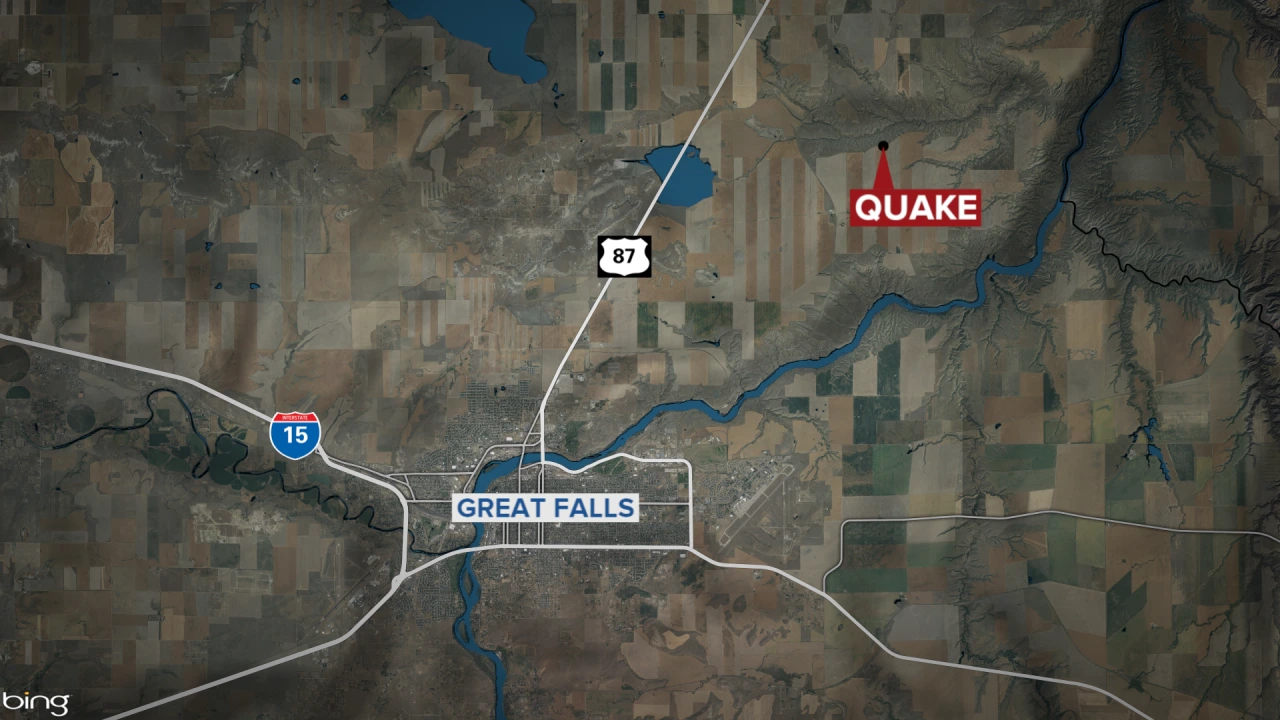
The US Geological Survey (USGS) reported that the quake measured 4.2 magnitude and was centered 7.5 miles northeast of Great Falls at a depth of 6.2 miles.
Residents in Great Falls, Sun Prairie, Chester, Shelby, Bigfork, and White Sulphur Springs reported feeling the tremor.
Messages to local authorities described houses shaking and objects rattling, though no injuries or significant property damage have been confirmed.
“The Treasure State is in one of the most seismically active regions in the United States,” said Great Falls Police Department spokesperson Lt. Jessica Palmer.
“While most earthquakes in Montana are small and rarely felt, residents should remain aware of basic earthquake preparedness measures.”
Montana sits along the intermountain seismic belt, which stretches through the western third of the state and accounts for the majority of earthquake activity. The region has a history of both minor and significant quakes.
Notable historical events include the 7.3 magnitude Hebgen Lake earthquake on August 17, 1959, which triggered over 160 new geysers in Yellowstone National Park and caused 28 fatalities from a rockslide in Madison Canyon.
More recently, a 5.8 magnitude quake struck Lincoln, Montana, on July 6, 2017, causing minor damage but no fatalities.
Smaller events are common, including a 5.3 magnitude earthquake in northeastern Montana on May 15, 1909, and a 4.5 magnitude tremor in Froid in 1943 that damaged a grain bin.
Seismologists say earthquakes of this magnitude in Montana are unlikely to cause significant structural damage but can serve as reminders of regional seismic risk.
Dr. Matthew Evans, seismologist at the University of Montana, said, “A 4.9 magnitude earthquake is moderate.
Structures built to modern codes are unlikely to suffer serious damage. However, it can cause anxiety among residents and minor disruptions in daily life.”
Dr. Linda Cho, director of the Montana Earthquake Center, noted, “This tremor underscores the importance of early warning systems.
The Android Earthquake Alerts System, which detected the event, plays a critical role in alerting residents even seconds before shaking occurs.”
- Date and Time: January 29, 2026, 12:41 p.m.
- Location: 7.5 miles northeast of Great Falls, Montana
- Magnitude: 4.9 (Google) / 4.2 (USGS)
- Depth: 6.2 miles
- Affected Areas: Great Falls, Sun Prairie, Chester, Shelby, Bigfork, White Sulphur Springs
- Reported Damage: None confirmed
“I was at Sam’s Club when the building started shaking. It was brief but strong enough to make everyone stop,” said local resident Jessica Miller.
Mark Thompson, a resident of Sun Prairie, said, “I felt my house vibrate, and the windows rattled. It was unnerving, but everything seems fine.”
Lt. Jessica Palmer emphasized, “Residents should ensure emergency kits are ready and review safety procedures, even if the immediate impact appears minimal.”
Experts say aftershocks are possible but likely to remain minor. Authorities recommend continued vigilance, particularly for communities near the intermountain seismic belt.
Dr. Evans added, “Monitoring and preparedness remain key. Earthquakes in this region are frequent but rarely destructive. Continued public education can minimize risk when moderate quakes occur.”
Thursday’s 4.9 magnitude earthquake serves as a reminder of Montana’s seismic activity, highlighting both the importance of early detection systems and community preparedness.
While no serious damage was reported, residents across the state and neighboring Canada experienced the tremor firsthand, illustrating the wide-reaching impact of even moderate earthquakes.
NOTE! This article was generated with the support of AI and compiled by professionals from multiple reliable sources, including official statements, press releases, and verified media coverage. For more information, please see our T&C.


