
KEY POINTS
- US senators stress Greenland should be treated as an ally, not an asset.
- Trump has threatened tariffs on nations opposing a US takeover of Greenland.
- Danish and Greenlandic leaders affirm sovereignty and warn of NATO implications.
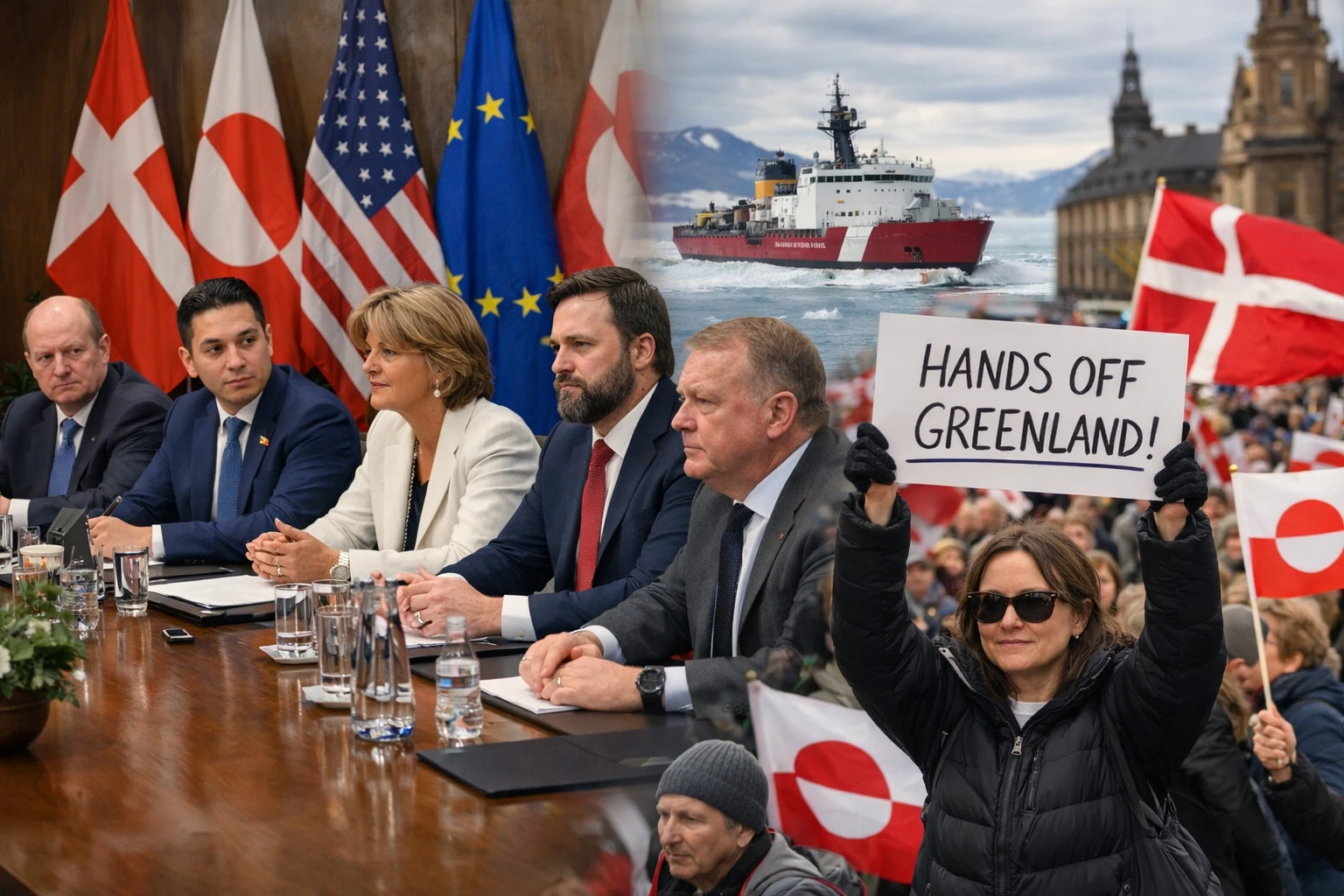
A bipartisan delegation of US lawmakers sought to calm tensions in Denmark and Greenland after President Donald Trump threatened tariffs on countries that oppose a US bid to take control of the strategic Arctic island.
The congressional delegation emphasized alliance and diplomacy, contrasting sharply with Trump’s rhetoric.
The Arctic island of Greenland, rich in critical minerals and strategic location, has become a flashpoint in US European relations.
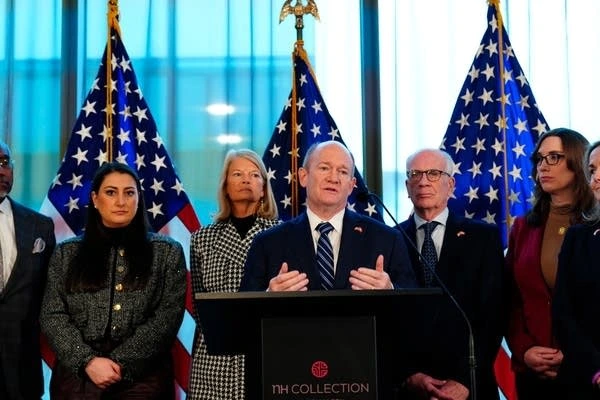
A bipartisan US congressional delegation visiting Copenhagen sought to reassure officials that the United States respects Denmark and Greenland’s sovereignty, following months of provocative statements by President Trump regarding a potential US acquisition of the island.
Trump has repeatedly suggested that Greenland, an autonomous territory of Denmark, could be annexed by the United States.
He has cited concerns over China and Russia seeking influence in the Arctic and described Greenland as crucial for US national security.
The White House has not ruled out military options, prompting strong rebukes from European allies.
Danish Prime Minister Mette Frederiksen warned that such a move could jeopardize NATO, while Greenland’s Prime Minister Jens Frederik Nielsen reaffirmed allegiance to Denmark.
US lawmakers on the delegation emphasized diplomatic engagement rather than coercion. Sen. Lisa Murkowski, an Alaska Republican, said Greenland should be regarded as “a US ally, not as an asset.”
Sen. Chris Coons, a Democrat from Delaware, highlighted the broader consequences for NATO credibility if alliances were perceived as transactional.
Foreign policy experts suggest that repeated US threats could erode trust in multilateral partnerships and complicate Arctic security coordination.
“The Americans used to be the good guys; they helped us, but now they all of a sudden are our enemy and that is a shock,” said Liv Aurora Jensen, a Greenland resident.
Thousands of Danish and Greenlandic citizens marched in Copenhagen carrying Greenlandic flags. Protester Elise Riechie told The Associated Press, “There are many small countries. None of them are for sale.”
Diplomatic channels remain active, with Denmark and Greenland engaging US officials in Washington.
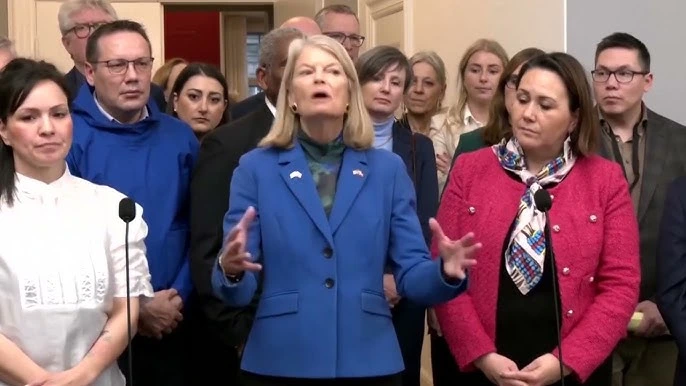
A working group has been agreed upon, though public interpretations differ between Denmark and the White House.
Analysts anticipate continued tension over Arctic security, resource access, and US European alliance management.
The Greenland episode underscores the sensitivity of Arctic geopolitics and alliance politics.
While US lawmakers seek reassurance and diplomacy, divergent messaging from the White House continues to create uncertainty for Denmark, Greenland, and NATO partners.
The situation highlights the broader challenge of balancing national security interests with alliance obligations.
Author’s Perspective
In my analysis, the Greenland dispute highlights rising Arctic geostrategic competition and its intersection with global mineral supply chains.
I predict that NATO members will formalize joint Arctic security protocols to deter unilateral resource grabs.
For local communities, this means heightened economic scrutiny and environmental oversight. Monitor Arctic mineral exploration agreements and allied military exercises.
NOTE! This report was compiled from multiple reliable sources, including official statements, press releases, and verified media coverage.
Adnan Rasheed, Lead Research Analyst


