
KEY POINTS
- Musk alleges OpenAI abandoned its nonprofit mission after restructuring.
- Microsoft disputes claims it aided any alleged misconduct.
- The Musk OpenAI lawsuit could reshape AI governance norms.
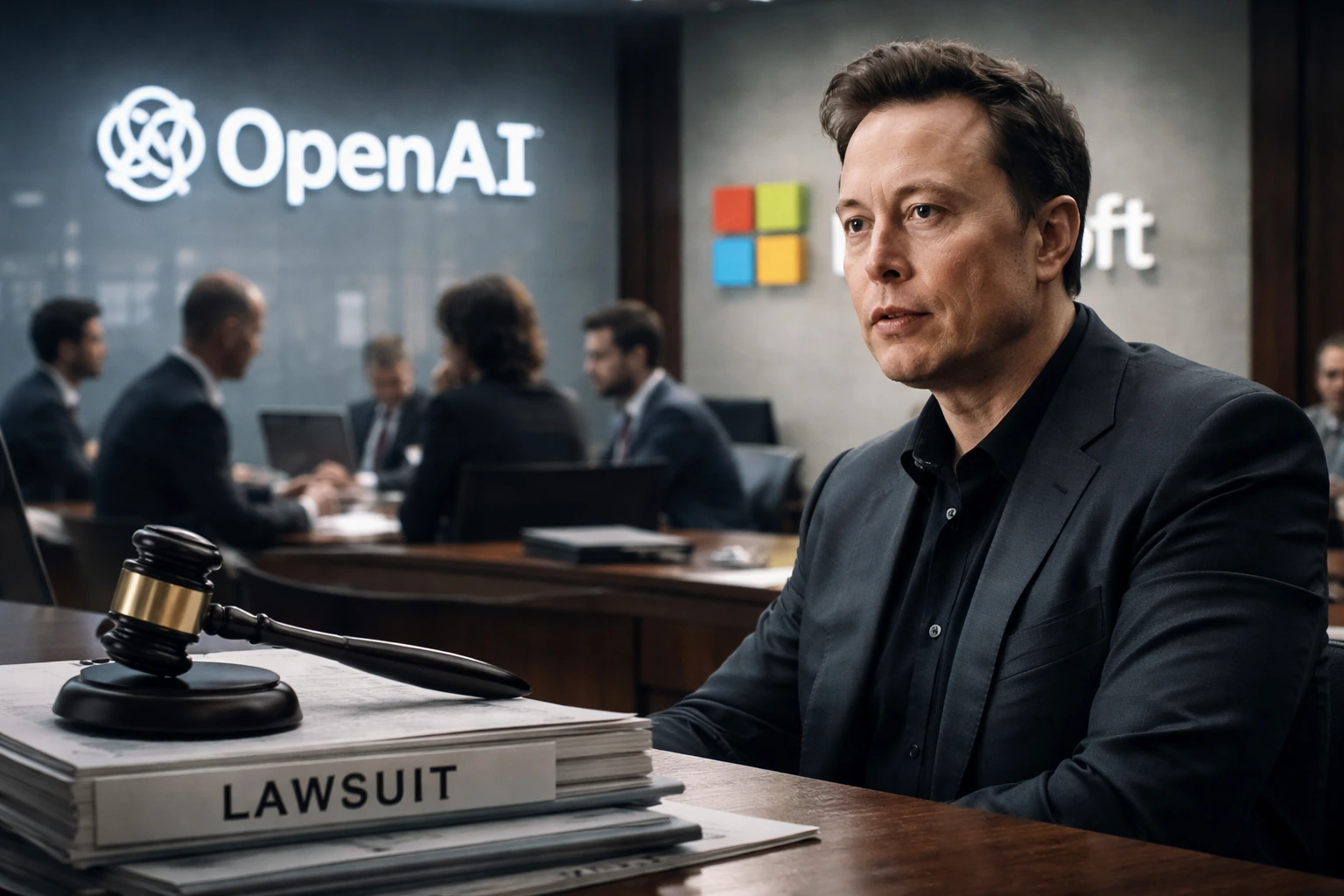
Elon Musk is seeking as much as $134 billion from OpenAI and Microsoft, arguing in a federal court filing that the companies reaped “wrongful gains” from his early backing of the artificial intelligence startup. The claim, filed Friday, escalates the Musk OpenAI lawsuit ahead of trial.
The damages claim places one of the world’s richest entrepreneurs against two of the most influential technology firms at a moment when artificial intelligence is moving from research labs into daily life.
By attaching a dollar figure to what he says were diverted benefits, Musk is reframing the dispute from a philosophical fight over mission to a high stakes financial reckoning with implications for founders, investors and nonprofit backed tech ventures.
Musk helped co-found OpenAI in two thousand fifteen as a nonprofit research group aimed at developing artificial general intelligence for the public good.
He left in two thousand eighteen, later launching rival firm xAI, which operates the Grok chatbot.
OpenAI subsequently reorganized around a capped profit structure and deepened its partnership with Microsoft, which integrated OpenAI models into products such as Azure and Office.
Musk argues that this shift violated the organization’s founding commitments and allowed private actors to capture value created for the public.
OpenAI has called the Musk OpenAI lawsuit baseless and part of a harassment campaign.
Microsoft has said there is no evidence it “aided and abetted” any alleged wrongdoing. Both companies challenged the damages calculations in a separate filing.
Legal scholars say the case could test how courts view hybrid nonprofit for profit structures.
“If founders can later reclaim value by pointing to mission drift, that introduces uncertainty for every philanthropic backed startup,” said Jessica Silbey, a professor at Northeastern University School of Law, speaking generally about similar disputes.
Economists note that Microsoft’s role reflects a broader pattern of cloud providers becoming gatekeepers for AI distribution, complicating questions about control, accountability and antitrust.
The Musk OpenAI lawsuit also intersects with debates over AI safety. Musk contends that commercialization pressures undermined safeguards, while OpenAI says its structure enables large scale deployment with oversight.
How courts interpret these competing narratives could influence future fundraising and governance models.
| Entity | Claimed Gains Range | Basis Cited |
|---|---|---|
| OpenAI | $65.5B–$109.4B | Valuation growth tied to early support |
| Microsoft | $13.3B–$25.1B | Commercial benefits from partnership |
| Total Sought | Up to $134B | Combined alleged wrongful gains |
“This is not just about money. It is about whether mission based tech can survive venture scale incentives,” said Anupam Chander, a Georgetown University law professor who studies technology governance.
A former nonprofit executive who advises AI labs, speaking on condition of anonymity due to client restrictions, said founders often underestimate how hard it is to preserve public interest mandates once products reach mass markets.
The court will first address whether Musk’s damages theory is legally cognizable. Discovery could reveal how OpenAI’s board weighed mission against monetization and how Microsoft structured access to models and data.
Regulators in the United States and Europe are watching closely for signals relevant to antitrust and AI safety rules.
Beyond its headline figures, the Musk OpenAI lawsuit underscores a central tension in modern technology who captures value from systems originally built for the public good.
The outcome may influence how future AI ventures balance open research, investor expectations and social responsibility, with ripple effects across an industry still defining its rules.
Author’s Perspective
In my analysis, Musk’s legal action signals rising tensions over AI commercialization and founder control, highlighting how mission driven ventures confront profit pressures.
I predict stricter regulatory standards will emerge for hybrid nonprofit profit AI entities, enforcing transparency on monetization.
For users, this shapes AI access fairness. Professionals should track corporate filings and governance disclosures to anticipate market shifts.
NOTE! This report was compiled from multiple reliable sources, including official statements, press releases, and verified media coverage.
Adnan Rasheed, Lead Research Analyst


